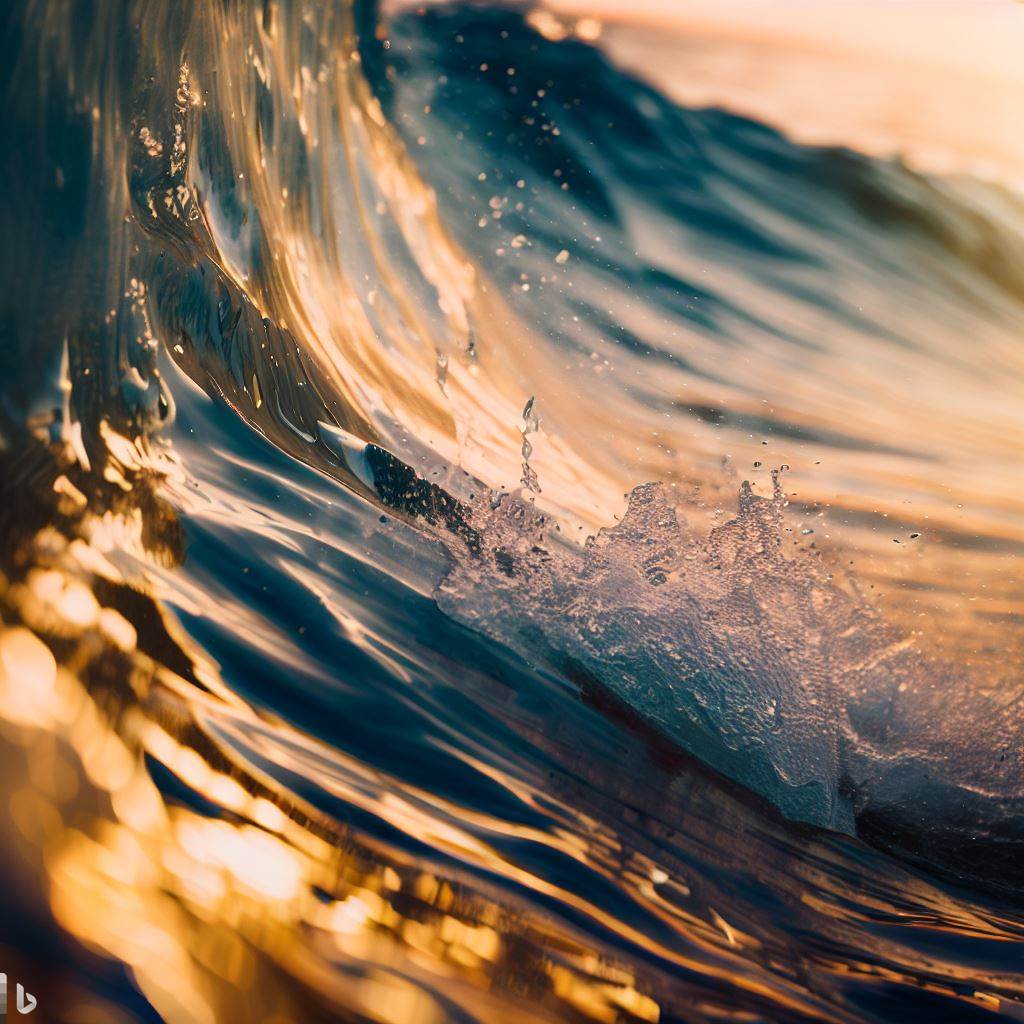
As an AI language model, I cannot generate images directly. Still, I can help you understand how AI-powered image generators work and point you to some popular AI image-generation techniques and tools.
AI image generation uses artificial intelligence, intense learning models, to create new images based on patterns and data learned from existing images. There are several methods for AI image generation, with some of the most popular ones being:
- Generative Adversarial Networks (GANs): GANs consist of two neural networks, a generator, and a discriminator, that play a cat-and-mouse game. The generator tries to create realistic images to deceive the discriminator, while the discriminator tries to differentiate between real and generated images. Through this competition, the generator gets better at creating realistic images.
- Variational Autoencoders (VAEs): VAEs are another generative model that learns to encode input images into a latent space and then decode them back into images. VAEs allow for interpolation in the latent space, enabling smooth transitions between generated images.
- Deep Convolutional Generative Adversarial Networks (DCGANs): These are an extension of GANs, utilizing deep convolutional neural networks for image generation, enabling more complex and high-resolution image synthesis.
- Neural Style Transfer: This technique allows you to combine the content of one image with the style of another image, creating artistic and unique results.
- Transformers for Image Generation: Transformers, originally designed for natural language processing, have been adapted for image generation tasks. These models can capture long-range dependencies in images and have shown impressive results.
For practical AI image generation, you can use various libraries and tools, such as:
- TensorFlow with Keras: TensorFlow is a popular deep learning framework, and Keras is its high-level API, making it easy to build GANs and other generative models.
- PyTorch: PyTorch is another widely used deep learning framework, known for its flexibility and ease of use in implementing GANs and other models.
- OpenAI’s DALL-E: DALL-E is a powerful image generation model developed by OpenAI that uses the GPT-3 architecture to generate images from textual descriptions.
- RunwayML: RunwayML is an accessible platform that allows artists and developers to use pre-trained AI models, including image generators, without extensive coding knowledge.
Keep in mind that training complex image generators often requires significant computational resources and expertise in deep learning. If you’re not into building models from scratch, you can find pre-trained models and tools that make it easier to generate images using AI techniques.


 0
0
 0
0
Average Rating